Showing posts with label Education. Show all posts

Saturday, July 20, 2019

Unschooled

Reading Kerry McDonald's Unschooled reminded me my early years as a parent. Despite not being satisfied with the educational system, we accepted with resignation that we had no option for our kids. We tried to choose the "best" school, however mostly the differences were the quality of the people leading the schools and their teachers. Even a friend tried to convince us to home-school our kids but we felt it was the same (school at home) minus the "socialization". Years later we were invited by another friend to join an alternative school, an off-the-system project. It was a challenge because people around us opposed and voiced their opinions with comments like "you are going to ruin your kids lives", and so. The project was worth, not because of pure opposition to the mainstream, but being off-the-system allowed them to offer a truly student center project with mixed ages, learners community, no-grades, no-homework, etc.

All this process was scary because we had no reference beyond the myth of schooling, the same myth we grew up with and we have survived!!! Was this our tantrum against the system and our kids were going to pay the price? The problems with the traditional schooling and the benefits of these new projects are well supported by theory and scholars yet little evidence was available to confirm that it works in practice. And this is where Unschooled fills the void. Using Kerry's own words 
"Schooling has become so engrained in our culture and conversation that disentangling it from learning takes time and though. Not only do we need to unschool our own thinking but also we need to help others do the same."
Unschooled is McDonald's "personal views and experiences related to unscholling and self-directed education" nonetheless it is very well documented. From John Locke to Peter Gray the breadth of references is a proof of the seriousness of her work. Along the theoretical references Unschooled offers a mosaic of real people's experiences doing what they believe is best for the kids. Unschooling is a movement that has its roots in the progressive reforms of the 1960's, it has reborn with a core difference "one refreshing change with today's unschooling movement is that it is being driven not by philosophers but by parents"

The book covers the history of unschooling, gives a definition and contrast it with schooling, and tackles some myths like; the curriculum, freedom is not license, appropriate ages to learn math or reading, and more. Also the book has a good diagnosis of the problems of the mainstream system and how it has worsen over the years despite efforts to fix it. Kerry McDonald is straight and honest in this respect "what we need conventional public schools to become if they are to truly move from a schooling paradigm to a learning one. They need to be built entirely from scratch."

In a later part of Unschooled, is a section with resources for unschoolers. From technology, resource centers, fab labs, maker spaces, libraries, revolutionary schools, apprenticeships, adventure playgrounds, and more. In summary this section is a window of options and an invitation to join and start a resource for our own communities. 

The last chapter is an outlook of the future of unschooling, which can be summarized in Kerry's call to action: 
"It all comes down to parents. It will be parents who decide whether or not we move toward an unschooled future. It will be parents who determine whether or not to reclaim their child's education."
The only subject I think the Unschooled is missing is the labor markets. As long as companies keep hiring by degree (the sheepskin effect that Brian Caplan describes in his book The Case Against Education) the unschooled future is riskier, specially for lower income families who can't rely on friends, connections, or family safety nets. There is some hope in this regard after some tech giants are dropping the diploma from their hiring process, but it is far from generalized practice. 

If you want to learn more about Kerry McDonald check her blog Whole family learning


Friday, June 21, 2019

Play to Live

Play to Live is a book for those who still haven't buy the importance of play for children and adults alike. If you know someone who still believes that play is a childish waste of time, give Brian VanDongen's book. 
"Play is not just important to education; play is education.  Play is not just important to a healthy lifestyle; play is a healthy lifestyle. Play is not just important to life skills; play is a life skill."
Without going into the depth of research on play this is a convincing invitation. Invitations to allow more play time to children and also to permit ourselves, as adults, to play.
"You have my permission: Be playful."

Thursday, June 14, 2018

Montessori: The Science Behind the Genius

Maria Montessori was an empiricist in many ways and her method developed from careful observation of children. In this book Angeline Stoll provides extensive research background to fill the voids of scientific support of the famous educational method.

In her book, Stoll addresses each of the eight principles of Montessori Education, providing support with specific research and expanded with actual Montessori practices. 

In most of the cases Montessori proved being in line with science, upholding the value of the method.


  1. Movement and cognition
  2. Choice and control
  3. Interest
  4. Motivation
  5. Collaborative learning
  6. Meaningful context
  7. Adult-child interaction
  8. Order and the environment

Stoll criticizes the traditional school system in different parts of the book, with a two-fold argument: The system is based on the Lockean view of the blank-slate mind; an empty container that needs to be filled with information (this is an oversimplification of Locke's view but the mainstream system seems to fit Stoll's interpretation). Thus, the system is organized for most efficient transmission as a manufacturing line. Maria Montessori recognized that children are born with dispositions to learn and each child is different, therefore the education method should facilitate that. From Stoll’s work we can conclude that Montessori is a superior education system than the standard offer for families and society.

However, there are a few issues to consider for further research.

Winning against the standard educational system is not a big challenge. Most of recent theories of how the mind works show that the empty vessel filled in a manufacturing line is plain wrong. The true contestants are innovative models that value the same principles as Montessori; such as Forest Schools, Free education (i.e. Sudbury School), unschooling, etc. However, this kind of research is hard to find since these practices are not widespread. Probably there is no right or wrong answer as different models satisfy different needs and tastes.

The value of research has some inherent flaws. Stoll is careful at explaining the limitations and through combining independent studies she ties in the conclusions. However most of these studies were made in school setting and as a play advocate once said; “studying children in schools is like studying wildlife in zoos”. Also, as Stoll quotes, “studying children in an environment that is not well prepared would be like trying to study normal cell growth in an infected petri dish”. There is a broad spectrum of Montessori implementations, how to know how the specifics degrees of preparedness of the cases affected the results?

From the play profession point of view, it is interesting the overlap between Montessori and play. However, Stoll explains that Maria Montessori had a limited understanding of play, reduced to toys that may sound opposite. 
“Dr. Montessori divided our hours into those for leisure and those spent at school. She implies that children may well choose to play with toys in their leisure time, just as we may choose to play chess, but that in the schools she structured, children did not choose to play.”
A more comprehensive understanding of play highlights the similarities. Using Peter Gray’s definition (Free to Learn). 
  1. Play is self-chosen and self-directed. This is coherent with the second principle of Montessori, choice and control. Play is an expression of freedom and Montessori give agency of learning to the child.
  2. Play is motivated by means more than ends. Play is activity conducted primarily for its own sake. Gray says “a playful student enjoys studying the subject and cares little about the test”, something very much related to the importance of personal interests and intrinsic motivation in Montessori. Same as grades, stars and rankings kill intrinsic motivation in education, turn free play into a competition.
  3. Play is guided by mental rules. Some of the critique to Montessori are its rules that Stoll explain is a balance that give freedom in some areas and structure in others. People need rules to operate either in play, school, society and work. In play children are agents in the definition of rules maybe more than in a Montessori school, but both offer way more freedom than traditional schools. This could be one of the areas of further research.
  4. Play is imaginative. Although Montessori discourage the use of fantasy in little children based on their inability to distinguish between fantasy and reality, creativity, play-pretend and sociodramatic elements of Montessori are based on the imagination of children. 
  5. Play is conducted in an alert but non-stressed frame of mind. The concept of flow is part of interest, context and even the purpose of what is the proper environment. 

The role of playworkers is quite similar of the role of the Montessori teacher, their goal is to disappear and just provide the right amount of clues to provoke children. Playworkers care for the quality of the playground as the teacher prepare the environment. Playworkers carefully observe the child at play just like the teacher observe the absorbent mind at work. And of course, the aphorism of Play is the Child’s Work is common to both. Of course, not everything is the same. For play advocates the affordances of items are important, the multiple uses that a person can give to a give object is discourage in Montessori classroom where each material is purposefully designed for a specific use.

It seems like children don’t find Montessori materials as alternative to toys but as engaging. Bob Hughes’ taxonomy of play (“Evolutionary Playwork”) can shed some light here.  A lot of the Montessori activities and materials can fit in some of the play types. 

Communication play is in the movable alphabet, sandpaper letters and other grammar exercises. Creative play is in the approach to science. Dramatic play and the understanding of how society works. Exploratory play and the multiple materials from the pink tower to the sound cylinders.  Mastery play is the end of Montessori three period lesson. Object play is the constant manipulation of objects such as the brown stairs, the red rods or the wooden cylinders to name a few. Recapitulative play is involved in the timeline of life or civilization. Role Play seems to be part of the appealing of Practical Life. Social play manifests in peer-to-peer and collaborative work and the mixed age groups. 

No wonder why kids can spend three hours of hard work; the program is structured as a flow of games where children enjoy enough freedom to manage their energy and attention. It is not hard to understand Maria Montessori’s reluctance about recess. In traditional schools, kids may be focused on an activity they enjoy as play and are forced to go out doing less interesting stuff. The pro-recess advocates critique the lack of freedom during breaks in traditional schools, it is not the same as in a well-run Montessori school. 

Finally advances in neuroscience could open a new door of research to connect the benefits of a Montessori method as well as all other alternatives that are popping and challenging the mainstream institutionalized education system. This could very well be the subject of another book but could provide the ultimate validation to the Genius.

Tuesday, March 27, 2018

The Self-Driven Child

The Self-Driven Child is an excellent book for parents worried about their children's future. 
"Parental anxiety isn't new. Parents have worried about their kids ever since having kids was a thing, but we believe it's worse now than before. Why? For one, we have a lot more information than we've ever had before."
I recommend "The Self-Driven Child" next to Madeline Levine "Teach your Children Well", and Alison Gopnik "The Gardener and the Carpenter". Books with supported research that help parents, and kids, enjoy themselves lowering anxiety and stress.
"Remember that your job is not to solve your children's problems but to help them learn to run their own lives"
"Your responsibility is to love and support your child. It isn't your responsibility to protect him from pain. You can't."
Stixrud and Johnson combine modern theory of neuroscience, positive psychology, and education, research references plus their own clinical practice experience along cases and practical advice. The first part of the book covers the theoretical foundation before getting into more actual problems like sleep, electronics and college.

In the end our goal as parents should be to love and enjoy our kids, to trust they will know how to get up on their feet and move along. And in the end, they will always come back when they need us.
"In a competitive, overly busy world, it's so easy to forget the basics: that enjoying your kids is one of the best things you can do for them, and for yourself."
"Teachers can teach, coaches can coach, guidance counselors can outline graduation requirements, but there's one thing only parents can do: love their kids unconditionally and provide them with a safe base at home."
The last section about college needs to be taken with a pinch of salt. If we assume p is the probability of succeeding after college and (1-p) the probability of not succeeding, and q the probability of succeeding without college and (1-q) is the the opposite. Stixrud and Johnson don't account if p>(1-p) and q<(1-q). Even the cases they develop show that succeeding without college is hard, maybe harder than succeeding in college. Yet succeeding in college by no means equals a happy life. If parents lower their expectations about their kids going to college they should acknowledge that a support system for their kids increases their chances. Considering that some college is the same as no college, the book check-list to evaluate if kids are ready for college is quite valuable. I recommend also reading Bryan Caplan "The Case Against Education", it complements what Stixrud and Johnson say. 

My rating 4 stars.

Wednesday, December 20, 2017

Courage to Grow

Courage to Grow is personally relevant because I'm part of the story. Laura Sandefer shares her experience along her husband, Jeff, in founding and moving Acton Academy from an idea to an international success. As she clearly discloses the book is not a how-to or a treatise of Educational theory. It is a beautiful personal story full of challenges, successes, discoveries and hard moments, but overall it is an inspiring story for those willing to do something to change how kids are educated and raise these days.

Laura shares how they decided not to sign their kids in a traditional school after attending a Montessori school. The Sandefer's dilemma echoes with our own of not accepting the fact that the only option was putting our kids in a traditional school. 

In opposition of the traditional approach of Education where results, grades, titles and degrees are what matter, the Sandefer's wondered "Can a vision of school rationally encounter the power of love and claim it?" and they didn't stop at the question and moved forward and made Acton Academy a reality.

Acton Academy was quickly recognized as an alternative to the traditional system. It's differentiation is "Our biggest point of separation is the upside-down power structure that pushes control and decision making to the children." Indeed what I value the most about Acton Academy is that children became responsible of their own Education and life. 

"A month after their visit, Juan had already found families (we were one of them) who would enroll their children. And with that Acton Academy Guatemala City began to take shape."

Acton Academy is an evolving community that has extended world-wide. It is not a simple franchise system but a sharing of values and principles that anchor a joined effort to improve the education of our kids.

Thanks to Jeff and Laura, Juanma and Analu for trusting the children and taking the lead.

Friday, July 17, 2015

Creative Schools

Sir Ken Robinson is one of the leading authorities in Education Reform. His TED talk about how schools kill creativity has been seen more than 30 million times becoming the most -viewed speaker on TED.com. His previous books are also best sellers and though provoking.

In Creative Schools, he makes a thorough diagnosis of the Education Crisis in the world and builds from success stories a proposal for School reform. 

Beginning with the needs of the world as the Industrial Revolution spanned attracting unskilled workers from the countryside to fulfill the jobs, to governments taking control all over the world, centrally planned educational systems are the norm today. 
Wherever you look, education is high on the agenda of governments around the globe. 
These days, governments scrutinize each other's education systems as earnestly as their defense policies.
On-going efforts to improve the system have failed again and again because they are more of the same without addressing the core of the problem. According to Robinson one of these key premises is that education is more than a linear system with simple causal relationships. 
The principle of linearity works well for manufacturing; it doesn't for people.
I said that education is best seen not as an industrial system but as an organic one. More specifically. it is what is know as a "complex, adaptive system"
The importance of education is indisputable yet Sir Ken Robinson makes it explicit to support his opinion about curriculum, assessment (evaluation), teachers and schools, kids and families.
The aims of education are to enable students to understand the world around them and the talents within them so that they can become fulfilled individuals and active compassionate citizens.
The four basic purposes of education: economic, cultural, social and personal
A Hayekian explanation to how the system actually works builds on multiple success stories. Diverse cases that go from his own experience, to Sergio Juárez Correa in Mexico, to Eric Mazur in Harvard, to Salman Khan and Khan Academy, to Sugata Mitra and the School in the Cloud, to Logan LaPlante and homeschooling, to cases in New Zealand, Argentina, and more, give hope to the feasibility of change. 
All living systems have a tendency to develop new characteristics in response to changing circumstances. They may have "emergent features," through "the interaction of small elements forming together to make a larger one. In education, there's an abundance of emergent features right now that are changing the context in which schools work and the cultures within them.
Robinson believes in local solutions; the subtitle of the book is The grassroots revolution that's transforming Education, Nonetheless he equals private initiatives with market solutions (commercial ventures are just one kind, many are non-profit or small local projects) and still hopes that policymakers will be able to lead the revolution. 
In some respects, mass education is, and always was, a process of social engineering. Sometimes the political intentions have been benign and sometimes not. 
Yet his invitation is to take a leading role in changing the status quo. We need multiple projects not just a substitute. Trying different alternatives may offer multiple solutions to the diverse needs of the people while helping future generations thrive in their live.
The revolution I'm advocating is based on different principles from those of the standard movement. It is based on a belief in the value of the individual, the right to self-determination, our potential to evolve and live a fulfilled life, and the importance of civic responsibility and respect for others.
Politicians and bureaucrats are interest groups who will not surrender power easily. Robinson's proposal is more pragmatic involving them in the solution and may be closer to achieve something than more radical solutions. I'm skeptical of anything that has government behind its name but hope that with Sir Ken Robinson's influence some changes will start to occur. 

My rating 4 stars.


Thursday, April 9, 2015

Get some headspace

I first learned about Andy Puddicombe through a conference by Dan Harris at Google (see bellow) where he explains as a regular guy his journey from an skeptic to a meditation and mindfulness promoter. Dan's businessmen style was very different from the stereotype of the 60's psychedelic hippy. I have considered meditation for quite a while but never take the initiative.

My first approach was to try Headspace app in my phone. A 10-minute 10-day introduction ended up being promising. Since I like to dig into the theory and the story of the author, I found "Get some Headspace" very appealing.

In his book, Andy Puddicombe, explains how he left his life in California to become a Buddhist Monk, a trip that is less unusual than I thought, but popularized by Steve Jobs biographers. Contrary to extreme cases, some as radical as Michael Roach and Ian Thorson, Andy's priorities are the day to day lives.

Andy Poodicombe's goal for the book is "demystify meditation and make it accessible and relevant to as many people as possible".

I found Headspace very interesting, indeed Andy's learning struggle didn't deter me from going on. The book supplements the app by giving a thorough explanation of the rationale and history behind Andy's model. For a Frontal-Left like me he supports his teaching with extensive research about the benefits of meditation and mindfulness. He synthesized years of training and practice in a technique that is suited for people in modern settings who can't (are not willing to) step back and regroup.

The second part of Get Some Headspace is a more in depth explanation of the "Take-10" program. It touches base on how the benefits of meditation affect other areas of life, like work, sleep, food, relationships, etc.

Finally a summary of some clinical cases exemplify the power but paced process of change through mindfulness.

Overall Get Some Headspace is about being in peace with ones thoughts and emotions. contrary to common believes , meditation is not about a clearing the mind, or silencing thoughts. Meditation is about the skill needed to step aside without getting involved.

I'm not sure how far I will get, at least this time I feel I found a mentor to accompany me on this quest.

Friday, March 20, 2015

Parenting in the Age of Attention Snatchers

Lucy Jo Palladino's book, Parenting in the Age of Attention Snatchers: A Step-by-Step Guide to Balancing Your Child's Use of Technology is a timely contribution to parenting in the 21st Century. An update version of the classical Marshmallow Experiment, the technology devices of today are magnets to the Involuntary Attention of kids and teens (and adults). 

Palladino complements the traditional research about willpower with modern results in neuroscience. The limbic (primitive) system arm wrestling with the modern man's prefrontal cortex that develops during puberty and adolescence.  

As a parent struggling with two kids of this age Palladino's work seems like a great tool (yet to put into practice). It gives perspective and ideas on how to help the children learn how to get the advantage of technology while they learn to self control, to use their Voluntary Attention. As Palladino says "Your child's ability to use an off button is quite possibly the most important technological competency she can learn". 

For parents the book has two gifts. First it emphasizes the importance of the relationship between parents and children. Nothing is more important than a good relationship among them and many times our effort to reduce the abuse of electronics ends up deteriorating the relationship. Second it puts the finger on the responsibility of the parents. Often we feel offended by the responses from our kids without acknowledging our contribution to the problem. Beginning with using e-nannies to giving a bad example with our own habits and not being able to separate the action from the agent. 

The seven step guide begins with an parent autoevaluation and as it goes helps us focus on priorities, changes of midsets, challenges, and results. Even though Palladino takes the parent back in the arena, it  reduces the stress of the job by clearing expectations and giving tools to kindly cope with the frustration of setbacks while patiently celebrate the results.

As adults we have a great deal to offer our kids. Since our mental abilities are fully developed Palladino suggest for instance asking the right questions and providing the metacognition necessary to understand the big picture and long term implications of our actions.

Additional resources like the American Academy of Pediatrics Media Life  Plan recommendations and references to more in depth studies enhance the toolkit provided by the book. 

Technology is part of our lives, having the tools to focus and use them wisely is a challenge for all, but specially for kids who are learning to use their prefrontal cortex. In the past attention snatchers were less exuberant but the plain mind-wondering has always existed. Our evolutionary drag is a challenge for modern world, and electronics are just a new struggle field. Parenting in the Age of Attention Snatchers is a workbook to help our kids be successful adults and us happy parents.

My rating: 4 of 5 stars.

Tuesday, December 16, 2014

Make It Stick

Peter Brown brings extensive research in neuroscience and education from the academia to the user. Make it Stick is a comprehensive work on how the brain works and how one can use this new knowledge to excel learning. I highly recommend this book to anyone looking for being better learner.

I felt that Brown play safe not criticizing the current school system. Although the purpose of the book is to summarize all these new ideas about learning/brain-building along suggestions on how to make them work, many of the obstacles he identifies come from the school system. If the ideas of learning as a responsibility of the learner not the teacher, and the teacher's new role as a facilitator don't permeate the system those who choose to be life long learners will have a lot to unlearn to learn.

Sunday, June 22, 2014

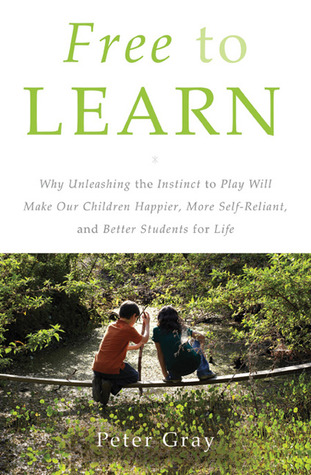
Free to Learn

In Free to Learn, Peter Gray brings another piece to the puzzle of Education. From his anthropological point of view he presents the case of how Play is the natural learning process while school is an institution design to control and alienate children. 

Overall Gray challenges parents to acknowledge that the system is destroying their children and that once the accept that they don´t want this for their children they can't continue supporting the current rotten system. Gray invites parents to try different alternatives, to trust their kids and create an environment that support their creativity and interaction.

I disagree on some contextual elements like his description of the Industrial Revolution. Nonetheless his message raises more questions and avenues to explore and research.

My rating 5 out of 5.

Monday, May 5, 2014

Mindset: The New Psychology Of Success

Mindset: The New Psychology Of Success
Carol Dweck work proposes a theory of the difference between those who succeed and those who didn't. As the title of the book reveals it is all about Mindset. Dweck work is interesting, not sure of how scientifically thorough since the book is mainly anecdotal, yet his theory makes perfect sense and is easy to relate to personal life.

After covering the the ground for her theory, Dweck offers specific advice for sports, business, personal relationships, teachers and parents, and individuals. Her ideas are easy to understand, somehow difficult to implement since they require a change of habits, and worth trying.

Dweck ideas complement other frameworks like Angela Dockworth and Paul Tough on Grit and others on Resilience.

My rating: 4 of 5 stars